WHO Warns Europe Heatwave Linked to More Than 1300 Deaths as Extreme Temperatures Grip Continent
WHO Warns Europe Heatwave Linked to More Than 1300 Deaths as Extreme Temperatures Grip Continent
Elderly Among Hardest Hit as France and Germany Record Historic Heat Records
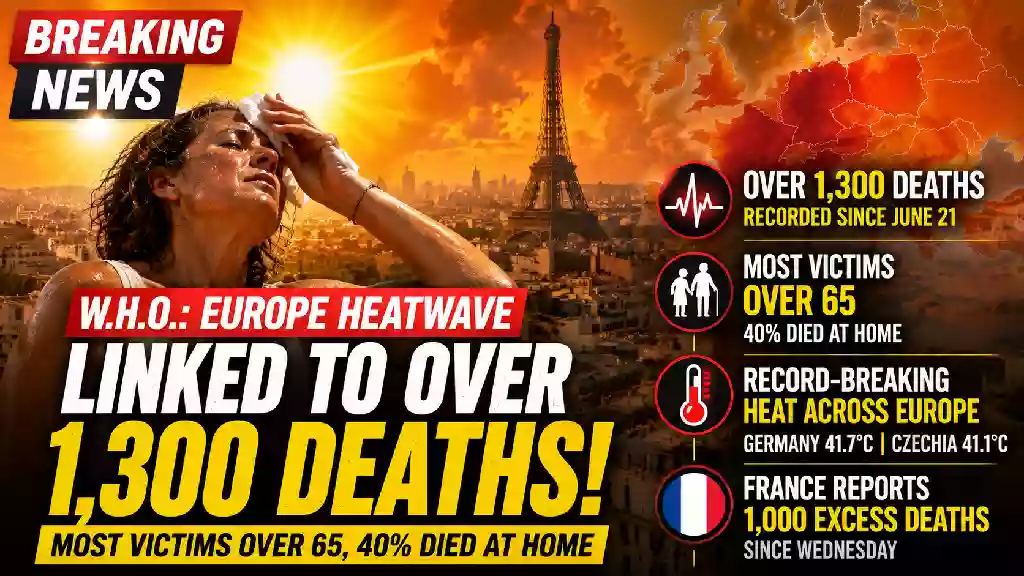
A relentless Europe heatwave has turned into one of the deadliest weather disasters of the year, with the World Health Organization (WHO) reporting that more than 1,300 people have died since June 21 due to prolonged extreme temperatures. Health officials warn the actual death toll could be significantly higher as several countries continue to assess the full impact of the record-breaking heat.
The unprecedented heat has affected millions across Western and Central Europe, placing immense strain on healthcare systems, power grids, and emergency services while highlighting the growing risks posed by climate-related extreme weather events.
WHO Warns Heatwave Death Toll May Continue to Rise
Speaking on the crisis, WHO Director-General Tedros Adhanom Ghebreyesus said that the majority of those who died were people aged 65 and older, with more than 40 percent of fatalities occurring at home. This alarming statistic underscores the vulnerability of elderly populations during prolonged periods of excessive heat.
Health experts believe many heat-related deaths often go unreported in the early stages of an extreme weather event because they are later linked to underlying medical conditions aggravated by high temperatures.
The WHO continues to urge governments to strengthen public health measures, improve heat emergency response systems, and encourage residents—especially seniors—to remain hydrated and avoid unnecessary outdoor exposure during peak daytime temperatures.
France Reports Unexpected Surge in Deaths
French health authorities have also raised concerns over the mounting human cost of the heatwave.
According to France’s National Health Ministry, approximately 1,000 more deaths than expected were recorded nationwide within just several days. While investigations continue, officials believe many of these excess deaths are directly or indirectly linked to the ongoing heat emergency.
Hospitals across several regions have reported increased admissions involving dehydration, heat exhaustion, and heat stroke, particularly among elderly individuals and patients with chronic illnesses.
Germany and Czech Republic Break All-Time Temperature Records
Germany experienced its third consecutive day of record-breaking temperatures, with thermometers reaching 41.7 degrees Celsius, making it one of the hottest periods ever recorded in the country.
Neighboring Czech Republic also registered an unprecedented 41.1 degrees Celsius, setting a new national temperature record.
Meteorologists say persistent high-pressure systems, dry conditions, and warming global temperatures have combined to create dangerous heat levels rarely seen across much of Europe.
Several cities have issued emergency health advisories, opened cooling centers, and urged residents to check regularly on elderly family members and neighbors.
Climate Experts Warn Extreme Heat Is Becoming More Frequent
Many climate scientists have warned that rising global temperatures are contributing to more frequent and intense heatwaves worldwide, although attribution studies for specific events are conducted separately.
Europe has become one of the fastest-warming regions globally, experiencing increasingly severe summers over the past decade. Higher average temperatures mean that heatwaves are lasting longer, covering wider geographic areas, and producing greater health risks than in previous generations.
Public health officials stress that heatwaves should now be treated with the same urgency as hurricanes, floods, or other major natural disasters because of their ability to silently claim thousands of lives.
Governments Urged to Improve Heat Preparedness
The WHO continues to encourage European governments to invest in long-term heat resilience measures, including improved public warning systems, urban cooling projects, expanded green spaces, and stronger community outreach programs for vulnerable populations.
Officials also recommend simple but potentially life-saving precautions, including:
- Drinking plenty of water throughout the day.
- Avoiding strenuous outdoor activities during peak afternoon hours.
- Staying in air-conditioned or shaded environments whenever possible.
- Checking regularly on elderly relatives, neighbors, and those living alone.
- Seeking immediate medical attention for symptoms of heat stroke or severe dehydration.
Heatwave Highlights Growing Climate Challenges
The latest European heatwave serves as another stark reminder of the growing human cost associated with extreme weather. As temperatures continue to break historical records, health authorities warn that preparedness, public awareness, and climate adaptation will become increasingly critical in protecting lives.
With investigations continuing into excess mortality figures across multiple countries, the final death toll may rise well beyond current estimates, making this one of Europe’s most significant weather-related public health emergencies in recent years.
#EuropeHeatwave #WHO #BreakingNews #ClimateChange #ExtremeHeat #France #Germany #Europe #WeatherAlert #GlobalWarming